


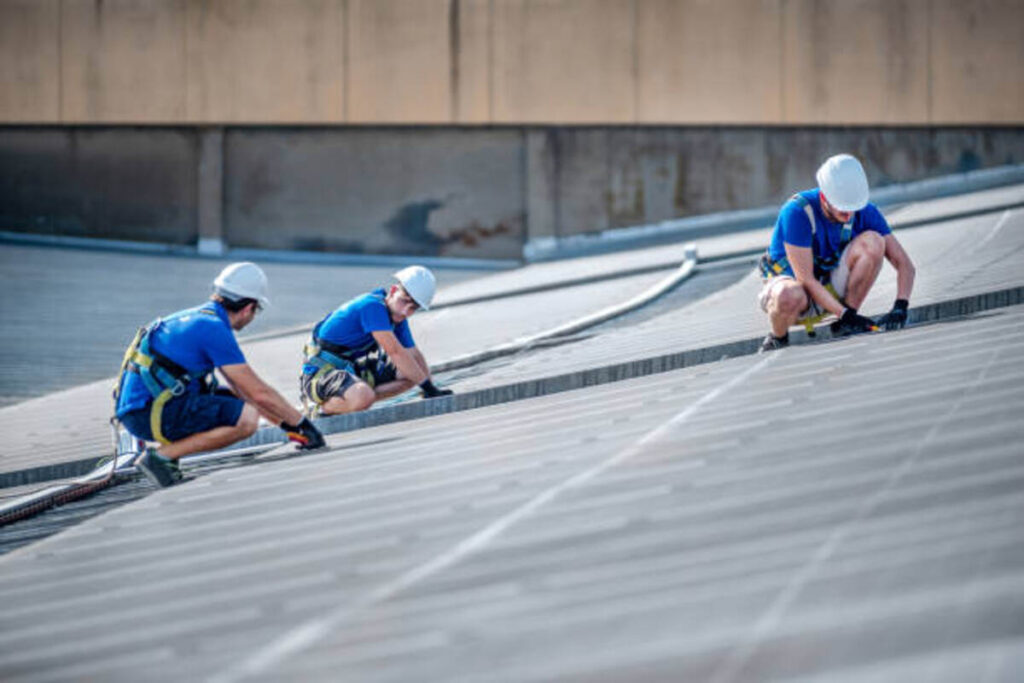
Powerful wind events passing through Madison can change the condition of a home’s exterior within minutes, even if everything looked fine the day before. Many of the issues that lead to calls for roof repair near me start with uplift forces that pull, twist, and stress materials in ways that aren’t visible from the ground. As roofing near me teams inspect storm-affected neighborhoods, they often find that the damage comes from pressure changes and hidden tension rather than debris impact alone.
Identifying Loose Perimeter Flashing After High Wind Gusts
Strong gusts push upward on the outer edges of a roof, where metal flashing shields seams and transitions. These edges take the brunt of the wind’s lift, causing pieces of the flashing to bend, loosen, or crack away from the structure. Even a small gap lets water slip beneath the materials, eventually sending many residents searching for Madison roof repair help after the next rainfall.
Wind turbulence often exposes the weakest connections first. A roof repair company checks these perimeter areas closely because loose flashing can spread problems inward. Once the seal breaks, moisture travels and softens underlying layers, making roof replacement or larger repairs more likely if not handled quickly.
How Pressure Differentials Rip Single-Ply Membranes
Single-ply systems behave differently than shingle assemblies when uplift forces hit. Air pressure can drop quickly on the upper surface while remaining higher below, causing the membrane to stretch or balloon. That movement weakens attachment points and pulls the sheet away from the insulation board, sometimes tearing the material entirely.
Such pressure shifts can be severe during Madison storms. Roofing professionals look for stretched sections, wrinkling, or sharp creases that signal membrane displacement. Each irregularity can widen during the next wind event, which is why early repairs prevent larger failures and reduce the need for full roof replacement.
Spotting Shingle Tab Lift Following Madison Thunderstorms
Thunderstorms often bring sharp, upward gusts that slip under the lower edges of shingle tabs. This lift breaks the adhesive bond that normally holds the shingle flat against the layer beneath it. Even if the shingles settle afterward, the seal rarely reforms tightly on its own. Lifted shingles become more vulnerable over time. A roof repair company inspects for tabs that flutter in the wind, have torn adhesive lines, or show granule displacement. Fast action prevents sections from peeling away during the next storm and keeps repairs limited rather than extensive.
Tracking Fastener Back-Out Caused by Constant Roof Vibration
Intense wind can vibrate the entire roofing structure repeatedly throughout a storm. This movement gradually loosens nails, screws, or clips that once sat secure in the deck or underlayment. Backed-out fasteners create raised points that break the surface seal, making the system more susceptible to water entry.
Signs of vibration-driven fastener failure are subtle. Roofing near me specialists check for raised shingle edges, small punctures around fasteners, or uneven rows where nails have shifted. Once identified, targeted roof repair prevents leaks from spreading along the loosened lines.
Detecting Hidden Deck Gaps After Severe Updraft Exposure
Updrafts can be powerful enough to flex the deck beneath the shingles. This flexing may open small cracks or widen old nail holes, creating hidden pathways for moisture. Deck gaps often remain unnoticed until staining appears on ceilings or attic insulation begins absorbing water. These gaps require careful attention because they contribute to long-term deterioration. Roofing technicians investigate beneath lifted shingles to determine how far the separation extends. Early detection keeps the repair localized and avoids widespread structural damage that would otherwise push a property toward roof replacement.
Why Weakened Corner Adhesives Trigger Emergency Repairs
Corners experience the most intense uplift activity since air pushes against two edges simultaneously. Adhesive strips in these high-stress areas can fail during storms, especially on aging systems with older sealing materials. Once a corner lifts, the surrounding shingles lose stability quickly.
This issue escalates fast because loosened corners catch more wind during every gust. Many calls for roof repair near me after storms begin with a compromised corner section. Addressing the problem early stops further tearing and reduces the impact on surrounding materials.
Recognizing Sealant Failure From Turbulent Airflow Stress
Sealants around vents, pipe boots, and protrusions endure constant flexing when turbulent wind flows across the surface. Over time, this movement causes the sealant to crack or separate, creating small but persistent entry points for water. These failures often show up long after the storm passes. The challenge is that broken sealant usually hides beneath overlapping materials. Roof repair near me inspections involve clearing debris, lifting components carefully, and checking each penetration point. Restoring airtight seals prevents recurring leaks and extends the life of the system.
Measuring Insulation Displacement Due to Internal Air Leaks
Air pressure inside the attic can shift upward during storms if gaps, vents, or unsealed openings allow interior air to push against the deck. This upward flow combines with exterior uplift forces, moving the insulation out of place and reducing energy efficiency. Displaced insulation also leads to uneven roof temperatures that accelerate shingle wear.
Correcting airflow issues requires more than replacing damaged insulation. A roof repair company checks the root cause, such as unsealed attic bypasses or ventilation imbalance. Addressing internal air leaks helps prevent future displacement and keeps the roofing system stronger during storm seasons.
Severe uplift effects can weaken structures quietly, making professional inspections essential after major storms. Fleming Roofing assists property owners by diagnosing storm-related damage, recommending appropriate repairs, and restoring the integrity of roofing systems throughout Madison.