



Mastering Strategy in Secret Hitler
Imagine sitting across from your best friend, absolutely certain they are lying to your face, yet entirely unable to prove it to the rest of the room. This exact brand of high-stakes paranoia is the beating heart of Secret Hitler, a wildly popular tabletop experience that thrives on trust, deception, and calculated betrayal. Despite its deliberately provocative historical name, the experience itself is less about 1930s politics and far more about the timeless human drama of figuring out who in your living room is quietly plotting against you. Check out the Best info about jago89 login.
To understand why this title has become a modern classic, look to digital phenomena like Among Us or recall traditional camp activities like Mafia. These are all built on a framework known in the tabletop community as a social deduction game. In plain English, this means players are assigned hidden roles—secret identities kept secure on face-down cards—forcing everyone to use conversation, behavioral clues, and voting patterns to deduce who is telling the truth and who is acting as a hidden traitor.
The core objective divides the table into two distinct, brilliantly unbalanced factions. On one side, you have the Liberals, a confused majority who simply want to pass good laws and keep the government stable, but who have no idea who their teammates are. Opposite them are the Fascists, a much smaller, hidden minority who know exactly who is on their team from the very first minute. Because the villains are outnumbered, they must work together in the shadows to sow chaos, frame innocent players, and trick the majority into willingly handing over power.
According to reviewers on massive databases like BoardGameGeek, this specific tension is exactly what transforms an ordinary social gathering into a thrilling mystery. Every single round requires two people to share power to pass a law, creating a brilliant “he said, she said” dilemma whenever a bad law hits the table. Did Sarah intentionally sabotage the vote because she is secretly evil, or was John genuinely forced to make a terrible decision because of the unfortunate cards he drew?
Navigating this web of misinformation requires more than just good luck; it demands a sharp eye for human behavior. Whether you are desperately trying to prove your innocence as a Liberal or carefully pulling the strings in the dark as a Fascist, understanding the underlying psychology entirely changes how you approach the table. Stepping into this psychological exercise means learning how to read the room, manage crucial information, and eventually master the delicate art of persuasion.
How to Set Up the Game for Balanced Play with 5 to 10 People
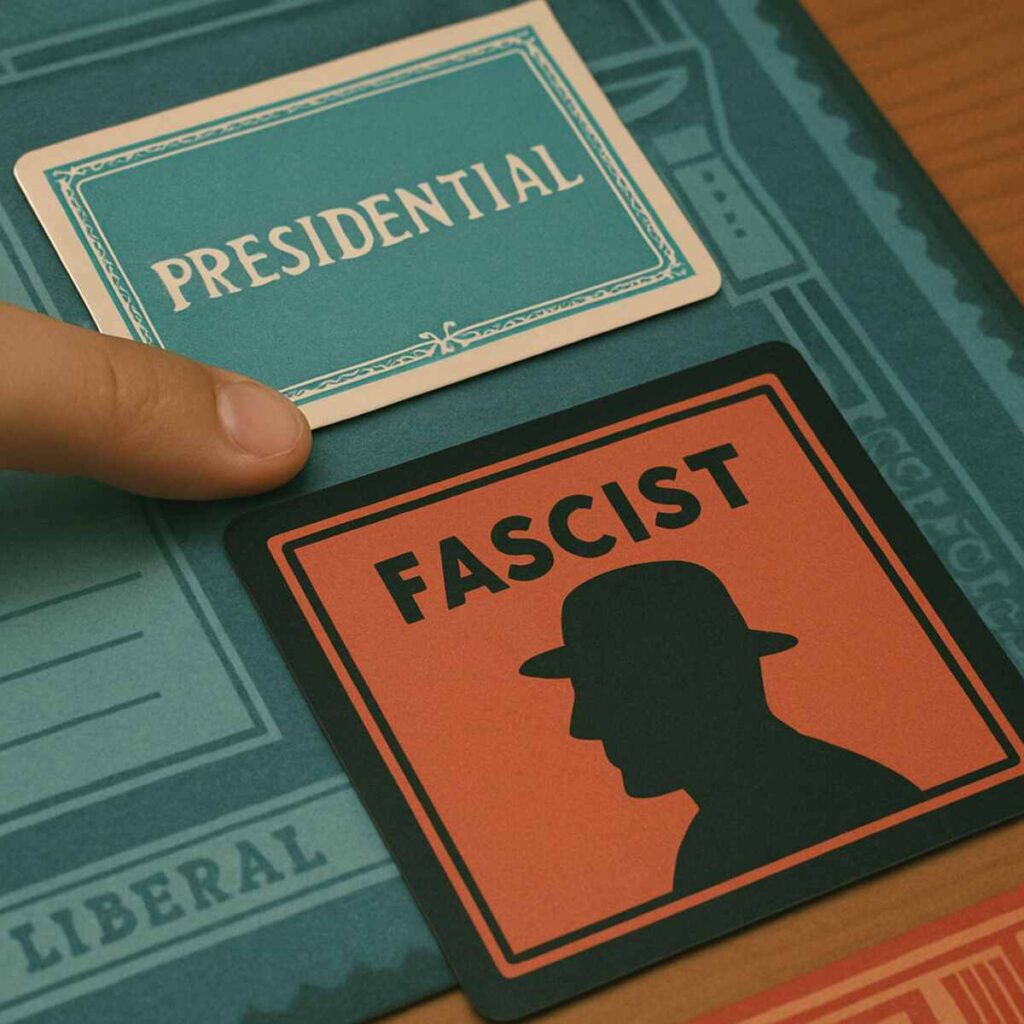
Gathering your friends around the table is the easy part, but laying out the game correctly is what ensures the tension builds fairly. Place the three main boards directly in the center of the table so everyone has a clear view. These boards form the policy track, which acts as the game’s scoreboard and countdown timer. You will also need to shuffle the policy deck—a stack of cards representing the laws you will vote on—and set it face-down within easy reach. Arrange the wooden President and Chancellor placards nearby, as these will be passed around constantly as different players grab power throughout the evening.
To set the stage for the upcoming suspicion and laughter, you must carefully assign everyone’s secret identities. Finding your group’s optimal player count is half the fun, but the game remains completely balanced as long as you strictly follow the setup instructions for 5 to 10 players. Build the role deck by combining the exact number of character cards needed, shuffle them thoroughly, and deal one face down to each person:
- 5 Players: 3 Liberals, 1 Fascist, 1 Secret Hitler
- 6 Players: 4 Liberals, 1 Fascist, 1 Secret Hitler
- 7 Players: 4 Liberals, 2 Fascists, 1 Secret Hitler
- 8 Players: 5 Liberals, 2 Fascists, 1 Secret Hitler
- 9 Players: 5 Liberals, 3 Fascists, 1 Secret Hitler
- 10 Players: 6 Liberals, 3 Fascists, 1 Secret Hitler
After every person checks their hidden role, the whole room must close its eyes for the crucial “Night Phase.” This silent ritual works just like the opening moments of party games like Werewolf, allowing the small traitorous team to recognize each other while the good guys remain completely in the dark. One player will verbally guide the group, asking the Fascists to open their eyes and acknowledge one another, and then asking Hitler to secretly raise a thumb. A great trick to keep the mystery intact is to have everyone tap the table lightly during this phase; otherwise, a squeaky chair or rustling jacket might accidentally reveal a liar before the first vote is even cast.
The moment the table’s eyes open, the deception officially begins. You will look around at your friends, knowing a few of them are already plotting together, yet everyone will aggressively claim to be a loyal citizen. Now that the physical pieces are arranged and the secret identities are locked in, you need to understand exactly what your specific job entails. Navigating this political minefield safely requires knowing your team: the difference between Liberals, Fascists, and Hitler.
Knowing Your Team: The Difference Between Liberals, Fascists, and Hitler
Have you ever tried to solve a complex puzzle while half the group is secretly working to dismantle it? This is the exact predicament facing the Liberal team, who represent the blind majority of players at the table. Their goal is straightforward: pass five Liberal policies to stabilize the government or successfully figure out who the enemy leader is and assassinate them. However, their massive numerical advantage is balanced by a complete lack of information. Every Liberal opens their eyes after the setup phase having no idea who is on their side, meaning they must rely entirely on intuition, voting patterns, and social cues to figure out who they can trust.
On the opposite end of the spectrum are the Fascists, a small but heavily informed minority operating in the shadows. Unlike the good guys, this team knows exactly who everyone is from the very first minute of the game. When comparing the Liberal vs. Fascist team roles, this dynamic creates a fascinating imbalance of power known as information asymmetry. The Fascist goal is to quietly sow chaos, secretly discarding good laws to pass six of their own dark policies. To pull this off, they have to seamlessly blend in with the majority, subtly backing each other up in arguments without making their secret alliance too obvious to the rest of the table.
The most brilliantly stressful role in the game, however, belongs to the titular villain. Even though Secret Hitler is technically on the Fascist team, they wake up just as clueless as a Liberal in games with seven or more players, creating a hilarious and tense dynamic where the leader is completely blind to their own supporters. The Fascists must subtly signal to their boss that they are on the same side, keeping them safe while the good guys are focused on identifying the hidden traitor. This deception builds toward the terrifying Hitler win condition: if the Fascist team manages to pass three of their policies, they can instantly win the game simply by getting their secret leader elected to power.
Navigating this web of secrets transforms every conversation into a high-stakes psychological test. Your best friend might be defending you because they are a fellow honest citizen, or they might be a Fascist desperately trying to earn your blind trust to seize control later. Understanding what each person at the table secretly wants is the only way to decode the lies and figure out who actually deserves to hold office.
Winning the Vote: Strategies for the President and Chancellor Nomination Process
Imagine holding the keys to the country, knowing that the person you choose as your co-pilot might secretly be plotting your downfall. This is the exact dilemma at the heart of the Chancellor and President nomination process. At the start of every round, the Presidency simply passes to the next person in the circle, but that President must actively select another player to be their Chancellor. Because these two people will be the only ones handling the policy cards this turn, choosing a trusted partner is the absolute most critical test a President will face.
Once a pair is proposed, the entire table gets a say in whether they actually take power through straightforward voting mechanics. Everyone secretly chooses a “Ja” (Yes) or “Nein” (No) card, then reveals it at the same time. While it might seem easiest to just vote “Ja” to keep the game moving, voting “Nein” is one of your strongest defensive tools. If your friend Dave has been acting unusually quiet or has previously passed a suspicious law, a “Nein” vote allows the group to block him from touching the deck again, completely shutting down a potentially dangerous duo before they can cause harm.
Relying on the exact same “safe” players every single round would make the game entirely predictable, which is why the rules enforce strict term limits. Players who successfully served as President and Chancellor in the previous round are legally barred from being nominated for Chancellor in the current round. This simple restriction brilliantly forces the table out of its comfort zone, requiring everyone to eventually hand power to players they might not entirely trust just to keep the government functioning.
Constantly rejecting every proposed government out of paranoia carries its own massive risk, as shown by the Election Tracker. Every time the table votes “Nein” and rejects a pair, a token advances along this track. If three governments are rejected in a row, the country falls into chaos, meaning the top card of the policy deck is flipped over and enacted automatically without anyone looking at it first. This mechanic acts as a ticking time bomb, forcing players to compromise and approve a government they might be unsure about rather than letting a random, potentially disastrous law pass by blind chance.
Successfully navigating these debates and getting a government elected is only half the battle. After the votes are tallied and the new leaders finally take their seats, the room falls dead silent as the real test of loyalty begins.
Reading the Cards: Mastering the Legislative Session Mechanics
Once the table finally agrees on a government and the room quiets down, the actual lawmaking begins through a high-stakes game of telephone. The process starts when the President silently draws the top three cards from the deck, chooses one to discard secretly, and slides the remaining two to the Chancellor. The Chancellor then looks at the two cards, throws one away, and flips the remaining card face up for the whole table to see. Because nobody else gets to look at these cards before they are played, this hidden filtering process creates the perfect breeding ground for deception, forcing the rest of the group to rely entirely on the word of two people who might be lying.
Before accusing anyone of treachery when a bad law passes, consider the deck’s exact composition. The deck is intentionally stacked against the good guys, creating natural paranoia and giving the hidden team a built-in excuse when things go wrong. Because of this uneven distribution, understanding the odds is your best defense against clever liars:
- 11 Fascist Cards (Red): The deck is heavily flooded with these bad policies. Because there are nearly twice as many red cards, a President drawing a “Triple Red” hand (three Fascist cards) is actually a common statistical reality, giving them a perfectly valid excuse when they are forced to pass bad options to their partner.
- 6 Liberal Cards (Blue): With so few good policies available, every single blue card is precious. If a President claims they gave the Chancellor a blue card but a red card is played, the table instantly knows a betrayal has just happened.
Catching those betrayals is the entire core of the game, boiling down to a classic “he said, she said” argument between friends. Imagine a scenario where a red card hits the fascist policy track, and the Chancellor throws their hands up, claiming the President only gave them two red cards to choose from. The President might immediately shout back, insisting that they had actually passed one blue and one red card, meaning the Chancellor had intentionally thrown away the good law! Since the discarded cards are kept face down and completely secret, the rest of the table must rely on basic social cues—like who is blushing, who is overexplaining, or who has been acting suspiciously all night—to figure out which of the two leaders is telling the truth.
Keeping a mental tally of these arguments becomes a powerful weapon as the game drags on and the deck shrinks. Basic card counting simply involves tracking how many blue laws are already on the board and listening to players claim they discarded other blue laws; if people claim to have seen eight blue cards when only six actually exist, someone is definitively lying to your face. Figuring out exactly who that liar is might require drastic measures and special abilities.
Executive Action: Using Presidential Powers to Expose Traitors
While watching another red card hit the board feels like a crushing defeat for the good guys, it actually triggers a crucial safety valve. Placing these cards activates the fascist policy track’s special powers, granting the current President a one-time, secret ability to gather information or manipulate the table. Early in the game, a President might earn a “Policy Peek” to secretly view the next three cards in the deck, which proves incredibly useful for verifying if the next duo in line is lying about their available options. Alternatively, they might trigger the presidential candidate investigation action, allowing them to secretly check one person’s team loyalty. Deciding whether to gather hard evidence about the deck or to check your quiet friend Sarah’s loyalty is the first major strategic hurdle you will face as a newly elected leader.
As the game progresses and more bad policies pass, these temporary abilities escalate from mere information gathering to direct control of the table. The “Special Election” power perfectly illustrates this shift, allowing the current President to bypass the normal turn order and handpick whoever they want to run the next government. Handing the keys to the presidency to a trusted ally can secure a crucial good law, but it comes with a terrifying risk. If you accidentally grant this massive advantage to a hidden traitor, you essentially hand the enemy team a free turn to pass more bad laws and unlock even worse abilities.
Nothing spikes the adrenaline in a living room quite like reaching the execution power, which fundamentally alters the entire social dynamic. Once the fourth or fifth red law passes, the President is forced to permanently eliminate one person from the game, effectively silencing them for the rest of the night. This is the ultimate game-changer because taking out a suspected bad guy tips the voting math heavily in favor of the good team, but executing an innocent ally is a devastating mistake. The sheer weight of this choice often leads to shouting matches, desperate pleading, and wild accusations as players try to convince the President to point the metaphorical loaded gun anywhere else.
Navigating this minefield of abilities requires absolute trust, which is precisely what the hidden team wants to destroy. When a President uses these powers to investigate someone or to execute a rival, the rest of the table still has only that President’s word to rely on regarding what they found or why they did it. If a secret bad guy gets their hands on the execution power, they can assassinate the good team’s most vocal leader under the guise of protecting the group. This chilling reality makes every vote for a new government a matter of life and death, especially as you enter the terrifying late-game phase.
The ‘Hitler Zone’: Preventing a Fascist Victory in the Late Game
Crossing the threshold of the third Fascist policy fundamentally changes the entire atmosphere of the living room. At this exact moment, a terrifying new rule activates, plunging players into a tense phase affectionately known as the “Hitler Zone.” From here on out, if the hidden leader of the bad guys is elected as Chancellor, the game ends immediately in a Fascist victory. This sudden shift is like a ticking time bomb, meaning the Liberal team can no longer afford to casually pass the government around to see who acts suspiciously. Every single election carries game-ending weight, transforming a previously lighthearted social deduction session into a high-stakes standoff.
To survive this perilous late-game strategy, the good team must adopt incredibly strict voting habits. Instead of nominating quiet players just to get them involved, Presidents must now strictly choose allies who have definitively proven their loyalty—usually someone who has passed multiple good laws or survived a thorough investigation. If a proposed government looks even slightly questionable, the only logical move is to vote it down. Rejecting a government doesn’t hurt the good team; it simply passes the Presidency to the next person in line. This “safe voting” mentality forces the bad guys to work significantly harder to get their boss into power, as nobody is willing to hand over the nuclear codes without absolute certainty.
Just when the pressure seems insurmountable, the game offers one final lifeline to prevent total disaster once five bad laws are on the board. This mechanic revolves around understanding how to use the veto power, an ability that allows a trusted President and Chancellor to mutually discard both drawn cards rather than play one. If a loyal President is handed two bad cards from the deck—a dreaded “forced red” scenario—they aren’t automatically doomed to pass the final, game-ending fascist policy. Instead, they can ask their Chancellor to veto the agenda, burn the cards, and safely move the turn to the next player. However, both players must agree, meaning if you accidentally elect a secret traitor as Chancellor, they will gleefully deny the veto and force the bad law through.
The sheer psychological weight of this final stretch is the ultimate test of your friend group’s communication skills and trust. Every proposed Chancellor feels like a potential trap, and every veto request sparks fierce debates about whether the deck was truly stacked against you or if someone is secretly manipulating the outcome. The tension is palpable because the good team is desperately trying to play it safe while the villains are doing everything in their power to create chaos and install their leader into office.
The Art of the Lie: How to Bluff and Misdirect as a Fascist
Drawing the red Fascist card at the beginning of the game instantly spikes your heart rate, transforming you from a cooperative team member into a master of deception. Succeeding in this hidden role requires more than simply lying with a straight face; it demands a psychological tactic known as “social engineering,” where you subtly manipulate how others perceive you. Instead of acting overtly villainous, your goal is to blend seamlessly into the good team while planting tiny seeds of doubt. Pulling the strings from the shadows is often the most thrilling part of the experience.
Early in the game, the smartest move is actually to help the good guys win, a counterintuitive approach known as the “Good Fascist” strategy. By deliberately passing Liberal policies when you are elected, you build a foundation of long-term trust that will shield you when you need to betray the table later. For instance, if you are the President and draw two good “blue” cards and one bad “red” card, throwing away a good card allows you to hand your Chancellor a guaranteed safe choice while secretly depleting the deck of helpful laws. Earning this early trust means that when things eventually go wrong, your friends will be far more likely to blame someone else.
To survive the inevitable accusations flying across the living room, learning how to bluff effectively as a fascist requires a versatile toolkit of psychological tricks. You can confidently deploy these four reliable techniques to keep the rest of the table guessing:
- The ‘Good Guy’ Act: Pass helpful laws early to cement your reputation as a fiercely loyal teammate.
- The Sacrifice: Publicly accuse a fellow bad guy to prove your own innocence, “sacrificing” them to bolster your credibility.
- The Confusion: Master the “accidental” mistake by feigning genuine ignorance about the rules to explain away a terrible play.
- The False Conflict: Secretly throw away a good card and blame an innocent Chancellor, trapping them in an unprovable “he said/she said” argument.
The true brilliance of this misdirection shines when you successfully pit two completely innocent players against each other. If you can manipulate the conversation so that two Liberals are fiercely arguing, the rest of the table becomes incredibly distracted trying to figure out which of the shouting players is the hidden traitor. The good team will waste precious time dissecting this fake rivalry, completely ignoring the fact that you are sitting quietly and safely on the sidelines. It is a brilliant way to take the heat off yourself while simultaneously destroying the communication the good team desperately needs to win.
While orchestrating these deceptions creates unforgettable moments, your friends will eventually start actively looking for the cracks in your story. Understanding the subtle art of detecting lies becomes the natural countermeasure, as every hidden traitor leaves behind small behavioral clues, from sudden quietness to over-explaining a simple vote. Defending against these psychological attacks requires a specific set of skills to protect the majority.
Shield of Democracy: Essential Tactics for the Liberal Team
Playing on the good team can initially feel like stumbling through a dark room where half the furniture is actively trying to trip you. Unlike the hidden traitors who know everyone’s identity from the start, the Liberals are completely in the dark, forced to rely on communication and observation to survive. One of the most effective winning strategies for the Liberal team is to remember that you do not need to identify every single villain to secure a victory. Instead, your primary focus should be on keeping the legislative assembly moving and passing good policies. Paranoia is the enemy of progress; if you spend too much time aggressively arguing over who the bad guys are, you risk stalling the game and handing the villains an easy win.
When the inevitable arguments do erupt over a bad policy being played, smart players use a technique called Conflict Analysis to regain control. Imagine a classic “he said, she said” scenario where the President claims they handed over two bad cards, but the Chancellor swears they received one good and one bad. You might not know exactly who is lying, but basic logical deduction tells you that at least one of these two players must be a secret fascist. By mentally grouping these conflicting players together, you instantly narrow down your pool of suspects. Even if you cannot definitively prove which person is the traitor today, you know exactly who to keep away from positions of power tomorrow.
To navigate this chaos effectively, you must establish what experienced players call Trust Chains. Once a pair of players successfully passes a good policy without any argument, they form the first link in a network of assumed innocence. You can expand this reliable chain by deliberately electing these proven players into office again, safely limiting the fascists’ opportunities to touch the cards. Simultaneously, paying close attention to the table and tracking votes helps expose those who consistently try to sabotage your safe pairs. If a particular friend consistently votes against a government composed of trusted players, their repeated attempts to disrupt the peace quickly reveal their hidden allegiance.
Ultimately, surviving as the majority is a thrilling exercise in patience and observation. While the traitors rely on creating fast-paced panic and temporary confusion, the good team wins by letting the math and behavioral clues slowly reveal the truth over time. Every single card played, argument sparked, and vote cast leaves behind a permanent record that makes it increasingly difficult for the bad guys to hide in the shadows. Bringing these psychological deductions into the modern era adds an entirely new layer of complexity.
Digital Deception: Tips for Mastering Secret Hitler Online
The transition from physical cards to digital screens completely changes the dynamics of deception. When playing on popular platforms like Secret Hitler Online, the classic physical cues of lying—like a sudden blush, avoiding eye contact, or nervous fidgeting—are entirely stripped away. This shift into digital social deduction forces you to rely completely on what people type and how they vote. Without a physical board to look at or friends to stare down across the room, the psychological tension transforms from reading body language to analyzing written words.
Successfully hiding your identity behind a keyboard requires a new approach to communication and an understanding of “textual tells.” Just as a player at the table might stutter when nervous, a digital player often changes their typing habits when they are trying to protect a secret role. A friend who usually types in quick, lowercase fragments might suddenly start sending perfectly punctuated, overly detailed paragraphs to defend a suspicious play. Paying attention to these subtle shifts in writing style is just as powerful as catching someone refusing to make eye contact during a crucial vote.
The most dangerous trap for any hidden traitor on the web is the permanent chat history, which inevitably leads to what players call “log errors.” In a traditional game, memory fades quickly, and arguments frequently devolve into confusing debates over what happened twenty minutes ago. Online, however, every single claim, accusation, and card play is perfectly recorded in a scrolling window for everyone to review. If a player claims they only saw bad cards in round two, but the chat history proves they enthusiastically endorsed a completely different story earlier, their own written words will instantly expose their lie to the whole group.
Beyond catching these digital contradictions, mastering the online experience requires a strict commitment to fair play and preventing meta-gaming. This simply means keeping outside information out of the game; using private voice calls to coordinate secretly, screen-sharing your hand, or accusing someone just because they took too long to click a button ruins the carefully balanced suspense. Treating the digital interface with the same respect as a physical board ensures everyone enjoys the thrill of the chase, whether they are lying through a chat box or smiling across a coffee table.
Becoming a Deduction Master: A Roadmap for Your Next Game Night
You now understand how a simple deck of cards and hidden identities can turn an ordinary living room into a thrilling theater of suspicion. Your journey to master Secret Hitler rests on one core dynamic: the Liberals must relentlessly pursue logic, while the Fascists must carefully cultivate confusion. Recognizing which side of that equation you stand on transforms the initial anxiety of deception into an exhilarating, solvable puzzle.
Before you deal the first hand, anchor your approach to three vital rules: always watch how players vote on a government (not just what they say), track who hands the Chancellor limited choices, and never hesitate to ask a player to explain their logic. One final pro tip for your next game night: if you draw a Fascist role, pick one Liberal player early and defend them completely to build undeniable, game-winning trust.
Because this game relies heavily on deception, managing the social aftermath is just as important as the mechanics. Tensions will inevitably spike when someone flawlessly bluffs a best friend, so always take a collective breath once the final card drops. Shake hands, reveal the roles, and let the table instantly dissolve into laughter; the true victory of this genre is creating great memories where you can look back and laugh about the deception.
Once your group embraces this electric atmosphere of hidden motives, you can confidently explore the wider genre. If you want to branch out, introduce your table to other social deduction games that capture a similar magic:
- The Resistance: Avalon: A fantasy-themed quest focused on group voting that completely removes player elimination, keeping everyone involved until the final minute.
- Blood on the Clocktower: A massive, deeply engaging town puzzle in which every player has a unique ability, and even “dead” players can talk and vote.
- Coup: A lightning-fast game of bribery and bluffing that distills the tension of secret identities into intense fifteen-minute rounds.
You are no longer just a spectator to the chaos—you are fully equipped to investigate it, manipulate it, and enjoy it. Gather your friends, shuffle the role cards, and step confidently into the delightful paranoia.