


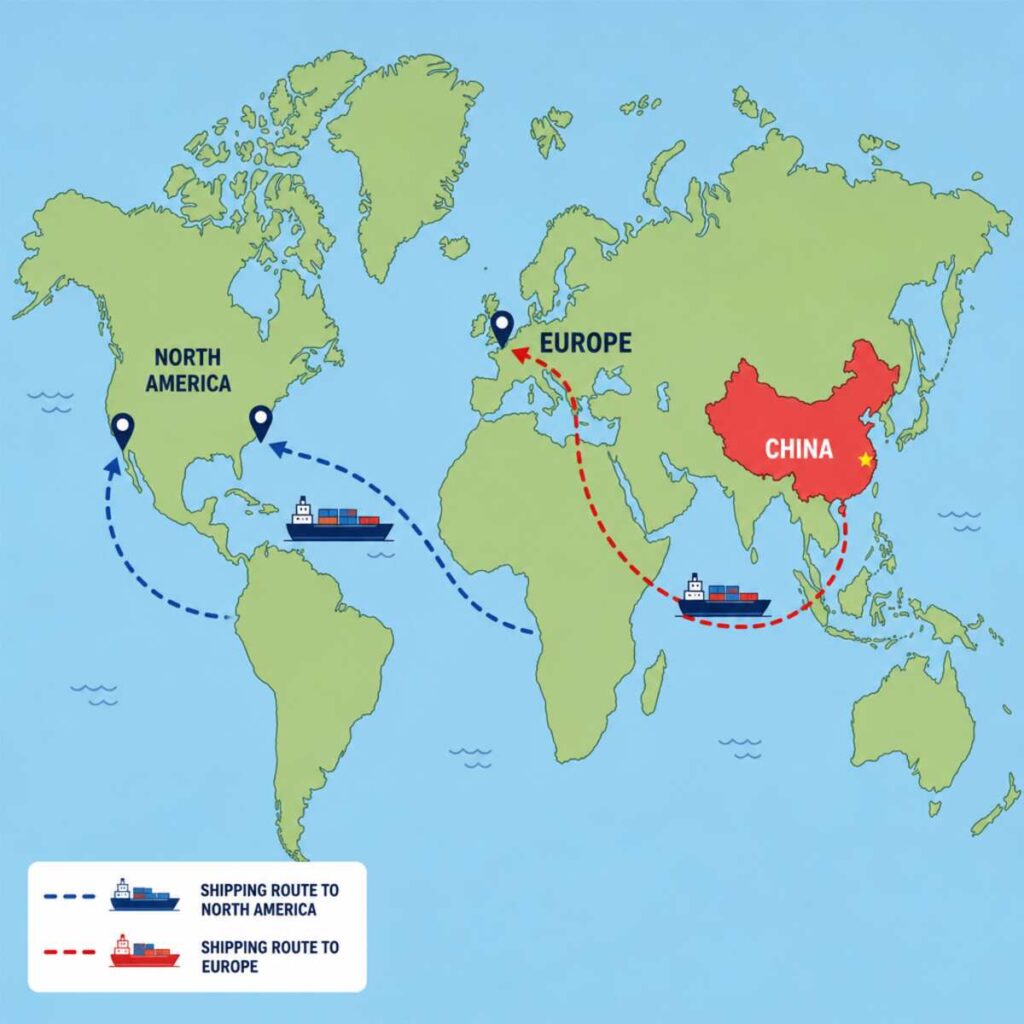
Welcome to the dynamic world of global ecommerce. If you are reading this, you are likely already aware of the immense potential—and the unique challenges—associated with dropshipping from China. It is a business model that has empowered countless entrepreneurs to build profitable storefronts without holding physical inventory. However, behind the glossy revenue screenshots and success stories lies a complex web of logistics, sourcing strategies, and international regulations. Look into the Best info about dropshipping from china.
Scaling a successful ecommerce store relies on much more than a beautiful website and clever marketing. It requires a deep understanding of supply chain management, an eye for quality, and the ability to navigate international borders seamlessly. Whether you are a seasoned seller looking to optimize your operations or a newcomer ready to launch your first store, mastering the intricacies of international trade is your key to longevity.
In this comprehensive guide, we will break down the barriers of international logistics. We will explore everything from finding the right manufacturing partners and choosing optimal shipping routes to demystifying the complex world of customs clearance and tax compliance. Let’s dive in and simplify the process of global ecommerce.
The Evolution of China Product Sourcing
Over the past decade, China product sourcing has evolved from a clunky, opaque process into a highly streamlined digital ecosystem. In the early days, entrepreneurs had to rely on fragmented directories and blind trust to find manufacturers. Today, technology has bridged the gap, providing unprecedented transparency and direct access to factory floors.
However, increased accessibility also means increased competition. To stand out, you can no longer rely on selling the exact same generic items as thousands of other merchants. True success now requires strategic sourcing, meticulous quality assurance, and a reliable fulfillment network.
Moving Beyond the Basics
Dropshipping from China is no longer just about listing cheap products with high markups. Consumers are smarter, shipping expectations are higher (thanks to the “Amazon Prime effect”), and ad costs are continually rising. To thrive, you must shift your mindset from “quick flip” to “sustainable brand.” This means prioritizing customer experience above all else, which inherently ties back to how effectively you manage your sourcing and shipping channels.
By mastering the foundational elements of product acquisition and logistics, you position your business to weather market fluctuations, outpace competitors by delivering faster, and build genuine brand loyalty.
Sourcing Strategies: Finding Your Perfect Partner
The foundation of any successful dropshipping business is the supplier. Your supplier is effectively your business partner; they handle product quality, packaging, and initial dispatch. If they fail, you fail.
Exploring the Best Wholesale Marketplaces for Resellers
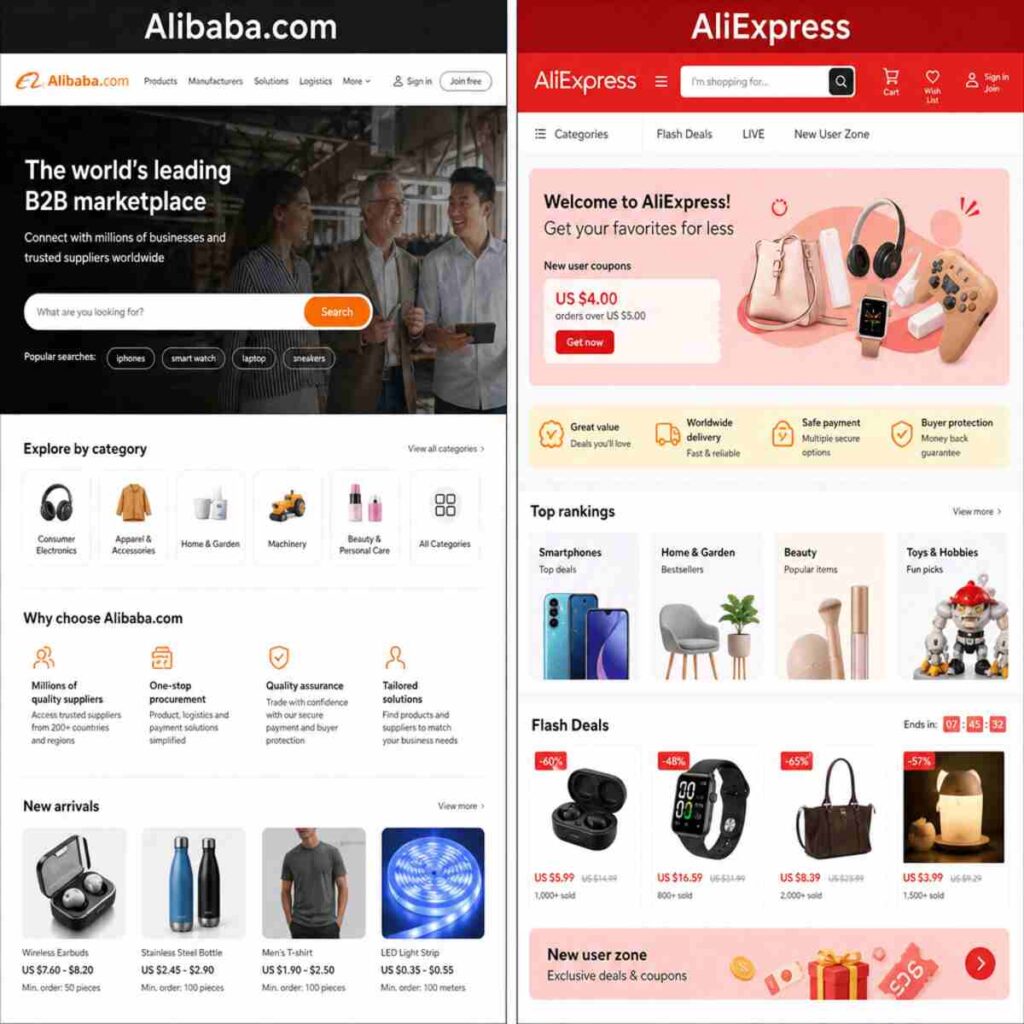
The internet is flooded with B2B platforms, but knowing where to look is half the battle. When evaluating the best wholesale marketplaces for resellers, you must consider the platform’s buyer protection policies, the ease of communication, and the minimum order quantities (MOQs).
While many platforms exist, a few have cemented themselves as industry standards:
- Alibaba: Best for bulk buying, private labeling, and direct factory negotiations.
- AliExpress: Ideal for beginners testing products with zero MOQs.
- Global Sources: Excellent for electronics and finding trade-show-level, highly vetted manufacturers.
- 1688.com: The domestic Chinese equivalent of Alibaba, offering incredible prices if you are willing to navigate the language barrier (often through an agent).
Sourcing Products from Alibaba: A Step-by-Step Approach
Sourcing products from Alibaba can seem intimidating due to the sheer volume of suppliers. However, it remains one of the most powerful platforms for ecommerce sellers looking to eventually scale into custom branding.
- Use Strategic Filters: Always check the boxes for “Trade Assurance” and “Verified Supplier.” Trade Assurance protects your funds if the product doesn’t meet the agreed-upon quality or shipping timelines.
- Analyze the Company Profile: Look at the supplier’s years in business. A company that has been operating for 5+ years is generally more stable than a completely new profile. Check their transaction volume and response rate.
- Distinguish Between Factories and Trading Companies: Factories manufacture the goods directly, offering better prices but higher MOQs. Trading companies act as middlemen; they might charge a bit more, but often offer a wider variety of products and lower MOQs. Both have their place, but know who you are dealing with.
- Initiate Professional Communication: When reaching out, be concise. State who you are, what you are looking for, and ask specific questions about product specifications, sample costs, and production lead times. A professional inquiry yields a professional response.
How to Find Reliable Chinese Suppliers
Beyond the major platforms, how do you verify that the person on the other side of the screen is trustworthy? Learning how to find reliable chinese suppliers is an active process of vetting.
- Request Documentation: Do not hesitate to ask for business licenses, ISO certifications, or product compliance certificates (such as CE or RoHS), especially if you are selling electronics or children’s items.
- Conduct Video Calls: Ask for a brief WeChat or Zoom tour of their facility. Scammers or low-tier middlemen will avoid this; genuine manufacturers will proudly show you their production lines.
- Order Samples: Never, under any circumstances, scale a product you haven’t seen yourself. This is crucial for verifying the build quality, the packaging, and the supplier’s attention to detail.
Working with Chinese Sourcing Agents
As your daily order volume grows (typically past 20-50 orders a day), relying on public marketplaces becomes inefficient. This is when working with chinese sourcing agents becomes a game-changer.
A sourcing agent is a local representative in China who acts on your behalf. They visit factories, negotiate prices in fluent Mandarin, consolidate packages, and manage quality control before items are shipped. Good agents can often source products at significantly lower prices than those listed on AliExpress, and they offer exclusive shipping routes unavailable to the general public.
Finding a good agent usually happens through networking in ecommerce communities, LinkedIn, or platforms like Upwork. When hiring one, ensure they have transparent fee structures (either a flat percentage of the order value or a per-item fee) and a proven track record with dropshippers.
Platform Showdown: Fulfillment Networks
If you aren’t quite ready for a private agent, dropshipping platforms are your best bet. Two of the most heavily debated options in the industry offer very different experiences for sellers.
The Great AliExpress vs CJ Dropshipping Comparison
When starting out, almost every merchant begins with AliExpress. However, as pain points arise, many migrate to dedicated fulfillment platforms like CJ Dropshipping. Let’s break down the AliExpress vs CJ Dropshipping comparison.
AliExpress:
- Pros: It boasts the largest catalog of products in the world. It is incredibly easy to use, integrates seamlessly with tools like DSers or Oberlo, and is the undisputed king of product testing. If a product exists, it is on AliExpress.
- Cons: You are dealing with thousands of independent, unvetted sellers. Shipping times can be erratic. If a customer orders three different items from your store, each from a different AliExpress seller, they will receive three separate packages on three different days. This severely damages the customer experience.
CJ Dropshipping:
- Pros: CJ is built specifically for dropshippers. They act as a massive consolidator. Even if you order three different items, CJ sources them, brings them to its warehouse, and ships them to your customer in a single package. They also offer print-on-demand services, custom packaging inserts, and generally faster shipping lines.
- Cons: Their product catalog, while large, is not as infinite as AliExpress. Their website interface can be slightly clunky, and their customer service—while dedicated—can sometimes suffer from time-zone delays.
Ultimately, AliExpress is excellent for discovery and product testing for new imports, while CJ Dropshipping is a superior stepping stone for fulfillment and consolidation before moving to a private sourcing agent.
Mastering Logistics: Shipping and Fulfillment
The single biggest objection consumers have to buying from independent dropshipping stores is the delivery time. In an era where two-day shipping is normalized, asking a customer to wait four weeks is a recipe for chargebacks and terrible reviews.
Domestic vs International Fulfillment Models
To solve the shipping dilemma, sellers must weigh domestic vs international fulfillment models.
International Fulfillment (Direct from China): This is the traditional dropshipping model. The primary advantage is cash flow. You hold no inventory and only pay for products after you make a sale. The downside is longer transit times and higher vulnerability to global supply chain disruptions.
Domestic Fulfillment (Local 3PL): As you find winning products, the ultimate goal should be transitioning to a Third-Party Logistics (3PL) provider in your target country (e.g., a warehouse in California or Texas for the US market). You buy inventory in bulk from China, ship it via sea or fast air freight to the US warehouse, and fulfill orders domestically in 2-5 days. This dramatically improves customer satisfaction, reduces per-unit shipping costs, and allows for much better packaging. The tradeoff is the upfront capital required to purchase inventory.
Strategies for Reducing Long Overseas Shipping Times
If you must fulfill from China (which is necessary during the testing phase), reducing long overseas shipping times is absolutely critical.
- Skip Standard Postal Services: Never use “China Post Ordinary Small Packet.” It is untracked and can take 30-60 days.
- Process Orders Daily: Ensure your supplier processes and dispatches orders within 24-48 hours. A fast shipping line is useless if the supplier sits on the order for a week before handing it to the courier.
- Utilize Premium Courier Lines: Work with your agent or platform to select specialized logistics providers rather than default postal services.
ePacket and YunExpress Shipping Options
For years, ePacket was the gold standard for dropshippers. It was a subsidized agreement between the US Postal Service and China Post, allowing small parcels to be tracked and delivered within 10-20 days relatively cheaply. However, the landscape has changed. Evolving postal agreements and global events have severely impacted ePacket’s reliability.
Today, exploring beyond ePacket and YunExpress shipping options (including 4PX, CNE Express, and Yanwen) is vital.
- YunExpress: Currently widely regarded as one of the best mid-tier shipping solutions. They operate dedicated cargo flights to destination countries. Once the plane lands and clears customs, the package is handed over to a local courier (such as USPS in America or Royal Mail in the UK) for final-mile delivery. This hybrid approach often yields consistent 7-12 day delivery times with reliable tracking.
- Dedicated Lines: Many sourcing agents now offer “Special Lines” or “Dedicated Lines” for specific countries (e.g., a “US Direct Line”). These often bypass traditional postal bottlenecks and are highly recommended for high-value items.
The Ultimate Guide to Customs and Taxes
We have reached the most intimidating part of global ecommerce: the legal and logistical borders. Failing to understand customs and tax obligations can result in delayed shipments, angry customers, unexpected fines, or even the seizure of goods.
Customs Clearance for Small Parcels
When you are traditional dropshipping, you are typically sending individual, low-value items directly to consumers. As a result, the customs clearance process for small parcels is generally streamlined.
Most countries have a “De Minimis” threshold. This is the valuation ceiling for imports below which no duty or tax is charged, and the clearance procedures are minimal.
- United States: The de minimis value is extremely generous at $800. This means that as long as the individual package you send to your American customer is valued under $800, it enters the country duty-free and clears customs almost instantly.
- European Union: The EU recently abolished its €22 de minimis threshold. Now, all goods imported into the EU are subject to VAT, regardless of value. This requires dropshippers to register for the Import One-Stop Shop (IOSS) to collect and remit VAT at the point of sale, ensuring smooth customs clearance.
- United Kingdom: Similar to the EU, the UK abolished its £15 threshold. VAT must be collected at the point of sale for consignments valued under £135.
Understanding these thresholds ensures that your small parcels aren’t held up at the border while tax payments are collected from surprised customers.
Handling Import Duties and Taxes for Bulk Sourcing
The game changes completely if you pivot to a domestic fulfillment model and import bulk inventory. When handling import duties and taxes for large shipments (e.g., 500 units of a product sent to a US 3PL), you act as the Importer of Record.
- HS Codes: Every product in the world has a Harmonized System (HS) code. This 6-to-10 digit number classifies the product and determines the exact duty rate you will pay when it enters the country. Always ask your supplier for the HS code and verify it with the destination country’s customs database.
- Customs Brokers: For bulk shipments via sea or heavy air freight, you will need a customs broker. They handle the complex paperwork, calculate duties, and ensure compliance with agencies such as the FDA or FCC (if applicable). Many freight forwarders provide in-house brokerage services.
- Tariffs and Trade Wars: Be aware of geopolitical factors. Section 301 tariffs in the US, for example, imposed additional duties on a massive list of goods manufactured in China. Your product might have a standard duty rate of 3%, plus an additional 25% tariff, significantly impacting your profit margins.
USA Tax Obligations for Ecommerce Sellers with Dropshipping from China
Navigating the IRS and state tax boards is often the most confusing aspect for sellers, whether they reside in the US or internationally. Understanding your USA tax obligations as an ecommerce seller with dropshipping from China involves breaking taxes into two main categories: Sales Tax and Income Tax.
1. Sales Tax and the Concept of Nexus In the US, sales tax is collected at the state and local levels, not the federal level. You are required to collect and remit sales tax in states where you have “Nexus” (a significant business presence).
- Physical Nexus: If you live in California, have an office in California, or hold inventory in a 3PL in California, you have physical nexus. You must collect sales tax on orders shipped to California residents.
- Economic Nexus: Following the landmark 2018 South Dakota v. Wayfair Supreme Court decision, states can now require out-of-state sellers to collect sales tax if they hit certain sales thresholds—even if they have no physical presence in that state. For example, if your dropshipping store processes more than 200 transactions or $100,000 in sales in Illinois within a year, you have economic nexus in Illinois and must register to collect the state tax.
Actionable Tip: Use automated tax compliance software like TaxJar or Avalara. These platforms integrate with your Shopify or WooCommerce store, track your sales state by state, alert you when you are approaching an economic nexus threshold, and automate the collection and filing processes.
2. Income Tax If you are a US resident, the net profit from your dropshipping business is subject to federal and state income tax, regardless of where your supplier is located. If you are a non-US resident dropshipping to US customers, the situation is nuanced. Generally, if you operate entirely from your home country, do not have US employees, and do not hold inventory in the US (i.e., pure dropshipping from China directly to the consumer), you may not be subject to US federal income tax, as you are not considered to be “Engaged in a Trade or Business in the US” (ETBUS). However, you will still owe income tax in your home country. Always consult a certified CPA familiar with international ecommerce to ensure full compliance.
Quality Assurance and Brand Building
One of the most dangerous myths in dropshipping is that you have no control over the product. While you don’t manufacture it, you are absolutely responsible for it. High refund rates due to poor quality will get your payment gateways (like Stripe or PayPal) shut down faster than you can say “chargeback.”
Quality Control for Overseas Products
Implementing strict quality control for overseas products is non-negotiable.
- The “Golden Sample”: Once you have tested a product and vetted a supplier, request a “Golden Sample.” This is the perfect, agreed-upon version of your product. If future bulk batches deviate in quality from the Golden Sample, you have grounds to demand a refund or a remake.
- Third-Party Inspections: If you are buying inventory in bulk (even if leaving it in a Chinese warehouse for your agent to fulfill), hire a third-party inspection service like QIMA or V-Trust. For $200-$300, an inspector will visit the factory, open a random percentage of your boxes, test the products for functionality, check the packaging, and send you a detailed photo report before you pay the final balance to the supplier.
Product Testing for New Imports
Before you spend thousands of dollars on ads, you must conduct rigorous product testing for new imports. Do not just test the market appeal; test the actual physical item. Order the product to your own house using the exact shipping method your customer will experience.
- Did it arrive in the promised timeframe?
- Was the packaging crushed?
- Did it have a strange chemical smell?
- Does the product function exactly as described in the ad copy? By experiencing the unboxing exactly as your customer will, you identify friction points and can address them with your supplier before scaling.
Building Private Label Brands Abroad
The ultimate evolution of a dropshipper is brand ownership. Building private label brands abroad allows you to command higher price points, build business equity, and generate repeat customers. Transitioning to a private label involves:
- Custom Packaging: Start small. Ask your sourcing agent to print custom polymailers, thank-you cards, or branded cardboard boxes. This significantly increases the product’s perceived value upon arrival.
- White Labeling: This involves taking a pre-existing successful dropshipping product and having the factory print your logo directly on the item.
- OEM (Original Equipment Manufacturer): This is true custom manufacturing. You provide CAD designs or specific modifications to a factory to create a product that is entirely unique to your brand.
Private labeling creates a moat around your business. Competitors can easily copy your website and steal your generic AliExpress product, but they cannot legally copy your trademarked brand.
Scaling Safely: Technology and Risk Management
As your daily order volume increases from 10 to 100, and then to 1,000, manual processes will break down. You cannot manually export CSV files of orders, email them to a supplier, and manually upload tracking numbers. Scaling requires automation and foresight.
Automated Global Order Fulfillment Tools
To maintain sanity and accuracy, you must integrate automated global order fulfillment tools into your tech stack. Applications like DSers, AutoDS, or proprietary apps provided by your sourcing agent connect directly to your storefront. When a customer buys from you, the order data is instantly pushed to your supplier. Once the supplier prints the shipping label, the tracking number is automatically pulled back into your store, and a shipping confirmation email is triggered to the customer. This automation frees you from administrative busywork, allowing you to focus on marketing and brand growth.
Navigating Common Supply Chain Pitfalls
Even with the best tools, global trade is unpredictable. Anticipating and mitigating common supply chain pitfalls separates the amateurs from the professionals.
- The Chinese New Year (CNY) Shutdown: Every year around late January or February, Chinese factories and logistics networks completely shut down for 2 to 4 weeks. If you do not plan for this by pausing ads or pre-purchasing bulk inventory to a local 3PL beforehand, your business will grind to a halt, and you will face massive shipping delays.
- Over-reliance on a Single Supplier: Never put all your eggs in one basket. Factories can burn down, go bankrupt, or suddenly change management. Always have a backup supplier who can produce your top-selling items at a moment’s notice.
- Currency Fluctuations: If you are paying your suppliers in USD, but the exchange rate with the Chinese Yuan (RMB) fluctuates wildly, your profit margins can shrink overnight. When negotiating long-term contracts, discuss how currency fluctuations will be handled.
- Ignoring Intellectual Property (IP): Dropshipping trademarked goods (such as counterfeit Nike shoes or Disney merchandise) is illegal and will result in your store being banned and potential lawsuits. Only source unbranded items or items where the supplier holds legitimate patents.
Conclusion
The landscape of ecommerce is constantly shifting, but the fundamental mechanics of supply and demand remain the same. Dropshipping from China is not a get-rich-quick scheme; it is a legitimate global fulfillment strategy that requires diligence, adaptability, and continuous learning.
By understanding the intricacies of China product sourcing, you empower yourself to find high-quality products that consumers actually want. By migrating from basic platforms to dedicated fulfillment networks and eventually working with Chinese sourcing agents, you build a resilient, scalable supply chain.
More importantly, by respecting the legal frameworks—such as handling import duties and taxes, mastering customs clearance for small parcels, and strictly adhering to USA tax obligations for ecommerce sellers—you ensure that the business you build today will still be thriving tomorrow.
Global logistics may seem like an intimidating web of regulations and tracking numbers, but once simplified and broken down into actionable steps, it becomes your ultimate competitive advantage. Prioritize your customer’s experience, invest in quality control, automate your fulfillment, and watch as your international ecommerce venture transforms into a sustainable, globally recognized brand.